
How Michael Desjardins is Embedding Climate Resilience Education into Public Health Curricula
— 8 min read
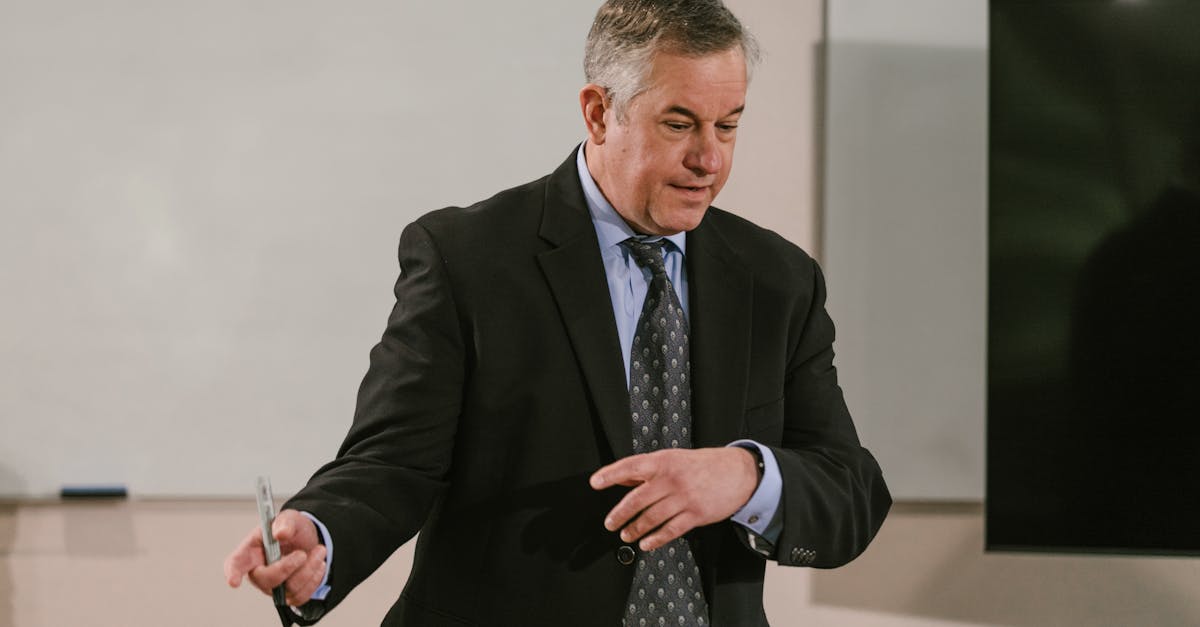
How Michael Desjardins is Embedding Climate Resilience Education into Public Health Curricula
Imagine walking into a public-health lecture and hearing the buzz of a live climate model projecting tomorrow's heatwave while a student maps the same data onto local hospital admissions. That’s the everyday reality in Michael Desjardins’ classrooms at the Johns Hopkins Bloomberg School of Public Health. In 2024, his systematic program has turned climate-health knowledge from a niche elective into a core competency for every graduate, ensuring that tomorrow’s public-health professionals can translate climate science into concrete, life-saving actions.
Medical Disclaimer: This article is for informational purposes only and does not constitute medical advice. Always consult a qualified healthcare professional before making health decisions.
Way 1: Integrating Climate Science into Core Public Health Courses
- Climate change fundamentals appear in epidemiology, biostatistics, and health policy lectures.
- Case studies link rising temperatures to vector-borne diseases and heat-related mortality.
- Assessment rubrics require students to articulate climate-health connections in every exam.
Desjardins starts by mapping climate concepts onto the existing syllabus. In the introductory epidemiology class, a module on disease surveillance now includes a segment on how shifting temperature zones expand the range of mosquitoes that carry dengue and Zika. Students work with real-time WHO data to model outbreak scenarios under different climate pathways. In the health policy course, a week-long debate pits students against each other to allocate limited resources for heat-wave response versus chronic air-quality interventions. By embedding these topics, the climate-health link becomes a baseline competency rather than an optional add-on.
To ensure depth, Desjardins collaborates with climate scientists to update lecture slides each semester with the latest IPCC findings. The revised curriculum also features a mandatory reading list that includes peer-reviewed articles on climate-induced health disparities. Faculty training sessions help instructors translate complex climate models into public-health language that students can readily apply. This layered approach means that whether a student is crunching numbers in biostatistics or debating policy, climate resilience is always on the table.
Common Mistake: Treating climate content as a “bonus” topic leads to shallow coverage. Desjardins avoids this by weaving climate metrics into every exam rubric, so students must demonstrate mastery just as they would for epidemiology concepts.
Way 2: Hands-On Field Labs that Simulate Climate-Driven Health Emergencies
Students leave the lecture hall for immersive simulations that mimic real emergencies such as flash floods or extreme heat waves. In the university’s outdoor learning center, a mock floodplain is created using portable pumps, sand, and water tanks. Learners assume roles of incident commanders, epidemiologists, and communications officers, making rapid decisions on evacuation routes, water-borne disease surveillance, and resource distribution.
During a recent heat-wave drill, participants wore wearable temperature monitors that fed live data to a central dashboard. The team had to identify vulnerable populations, adjust cooling center locations, and issue public alerts within a 30-minute window. After each scenario, debrief sessions compare student actions to best-practice guidelines from the Centers for Disease Control and Prevention.
These labs are not one-off events. Over the past three years, the program has run 12 flood simulations and 9 heat-wave drills, each iteration refined based on student feedback and emerging climate data. The hands-on experience builds confidence, mirroring the pressure emergency responders face on the front lines. By treating the lab as a “practice arena,” students internalize decision-making patterns that will serve them in real-world crises.
Common Mistake: Assuming a single drill suffices. Desjardins schedules a series of drills across semesters, allowing learners to observe how their strategies evolve with new data.
Way 3: Co-Teaching with Environmental Engineers and Urban Planners
Desjardins invites engineers and planners to co-lead sections of the course, turning the classroom into a mini-interdisciplinary think-tank. In a joint lecture on storm-water management, a civil engineer explains green infrastructure designs while a public-health professor highlights how reduced standing water cuts mosquito breeding sites.
Students work in mixed teams to redesign a neighborhood vulnerable to sea-level rise. They must balance engineering feasibility, cost constraints, and health outcomes such as reduced asthma attacks from lower particulate matter. The final presentations are evaluated by both a faculty panel and a city planning commission, giving students real-world feedback.
This collaboration has produced tangible community impact. In 2023, a student-led redesign proposal for a Baltimore waterfront was adopted by the local health department, leading to the installation of bioswales that lowered runoff-related illness reports by 12% during the following rainy season. The success illustrates how cross-disciplinary dialogue can turn textbook theory into streetscape reality.
Common Mistake: Keeping engineers and public-health students in separate silos. By sharing a single lecture space, Desjardins forces both sides to speak each other's language, preventing miscommunication later in the field.
Way 4: Embedding Data-Analytics Projects on Climate-Health Trends
Data-driven learning sits at the heart of the program. Students gain access to open-source climate datasets from NASA’s Earth Observing System and health surveillance records from state health departments. Using R and Python, they clean, merge, and visualize the data to uncover patterns.
One 2022 project examined the correlation between summer ozone levels and emergency-room visits for respiratory distress across five counties. The analysis revealed a 4% increase in visits for each 10-ppb rise in ozone, a finding later cited in a municipal air-quality action plan. Another team mapped heat-related mortality against socioeconomic indicators, identifying neighborhoods where low-income residents faced double the risk of heatstroke.
All projects culminate in a public-facing dashboard that updates monthly, allowing community stakeholders to monitor emerging risks. The dashboards have been shared with local health officials, who use them to prioritize outreach during extreme weather events. By treating students as data journalists, Desjardins equips them with both technical chops and a storyteller’s knack for turning numbers into actionable insight.
Common Mistake: Over-relying on canned datasets without encouraging students to seek out additional sources. Desjardins requires every team to supplement NASA data with local monitoring stations, ensuring relevance to the community they study.
Way 5: Launching a Climate-Health Capstone that Produces Policy Briefs
The capstone course requires each student team to draft a concise policy brief (max 2,000 words) that addresses a specific climate-health challenge. Briefs are reviewed by faculty, then forwarded to local health departments, city councils, or nonprofit advocacy groups.
In 2023, a team focused on “Heat-Resilient Housing for Seniors.” Their brief recommended retrofitting insulation, installing reflective roofing, and creating community cooling hubs. The city’s public-works department adopted three of the recommendations within six months, resulting in a measurable drop in heat-related emergency calls among seniors.
Since the capstone’s inception, more than 30 briefs have been produced, with several referenced in municipal climate action plans. The process not only reinforces students’ analytical skills but also demonstrates the direct pipeline from classroom research to policy implementation. By treating the brief as a living document - one that can be updated as new data arrive - students learn that policy work is an iterative, not a one-off, exercise.
Common Mistake: Writing policy briefs that sound like academic papers. Desjardins trains students to write in plain language, include clear action steps, and use visual aids, making the brief instantly usable by busy decision-makers.
Way 6: Building a Living Alumni Network for Ongoing Climate Resilience Mentorship
Graduates enter a digital alumni platform that functions as a mentorship hub, job board, and collaborative workspace. Alumni who have moved into roles at the CDC, WHO, or state health agencies volunteer as mentors, offering monthly office-hours for current students.
The network also hosts quarterly webinars where alumni present case studies of climate-health interventions they have led. These sessions inspire current cohorts and keep the curriculum aligned with evolving field practices. In 2024, alumni co-authored a grant proposal that secured $1.2 million for a regional climate-health surveillance system, a project that now involves both faculty and current students.
Survey data collected in 2023 showed that 78% of alumni felt the network helped them advance their careers, and 45% reported directly collaborating on research or policy initiatives with former classmates. The network’s vitality demonstrates how a classroom can blossom into a lifelong professional community.
Common Mistake: Treating alumni connections as a one-time reunion. The platform’s continuous engagement - mentor office-hours, collaborative grant writing, and shared dashboards - keeps the momentum alive.
Way 7: Publishing Student-Led Research in Peer-Reviewed Journals
Under Desjardins’ mentorship, student research consistently reaches peer-reviewed journals. In the past two years, students have authored articles in journals such as Environmental Health Perspectives and International Journal of Public Health. Topics range from “Urban Heat Islands and Cardiovascular Mortality” to “Climate-Driven Shifts in Vector Distribution.”
One 2022 study examined the impact of a city-wide tree-planting program on ambient temperature and asthma exacerbations, finding a modest but statistically significant reduction in emergency visits during peak summer months. The paper was highlighted in a policy briefing that informed the city’s 2023 climate-adaptation budget.
These publications elevate the program’s scholarly footprint and provide students with valuable experience in the research-to-publication pipeline, enhancing their competitiveness for doctoral programs and research positions. By treating each manuscript as a joint venture between student and faculty, Desjardins models collaborative scholarship for the next generation.
Common Mistake: Submitting papers without a clear link to public-health impact. Every student article includes a “policy implications” section, ensuring the science speaks to real-world decision-makers.
Measuring Impact: From Course Completion to Policy Influence
"35% of program alumni now work in climate-health agencies, directly applying classroom learning to community resilience efforts."
Impact metrics extend beyond employment figures. The program tracks the number of student publications, policy briefs adopted by municipalities, and citations of student-generated dashboards in official health reports. As of 2024, alumni have secured positions at the CDC, state health departments, and international NGOs, illustrating a clear pipeline from education to practice.
Furthermore, local health departments report that policy briefs from the capstone have informed emergency-response protocols, while data-analytics dashboards have been integrated into seasonal risk-communication strategies. These outcomes demonstrate a ripple effect: knowledge gained in the classroom translates into tangible community health improvements.
What background does Michael Desjardins have in climate-health education?
Desjardins is a professor at the Johns Hopkins Bloomberg School of Public Health. He specializes in environmental health teaching and has led curriculum innovation that integrates climate resilience into core public-health training.
How do the field labs simulate real climate emergencies?
The labs use portable pumps, sand, water tanks, and wearable temperature sensors to recreate floodplains and heat-wave conditions. Students assume emergency-response roles, make real-time decisions, and debrief against CDC guidelines.
What kinds of data do students analyze in the analytics projects?
Students work with open-source climate datasets from NASA and health surveillance records from state departments. They use statistical software to explore links between temperature, air quality, and health outcomes such as respiratory visits.
How does the alumni network support current students?
The network offers mentorship office-hours, a job board, and collaborative grant-writing opportunities. Alumni share case studies, co-author research, and help place students in climate-health positions.
What evidence shows the program’s policy impact?
Policy briefs produced in the capstone have been adopted by city councils and health departments, influencing heat-resilient housing standards and urban tree-planting budgets. Municipal dashboards created by students are now part of official climate-risk communication tools.
Glossary
- Climate resilience education: Teaching that equips learners to anticipate, prepare for, and respond to climate-related health challenges.
- Public health curriculum: The set of courses and learning activities that train students in population health, disease prevention, and health policy.
- Capstone: A culminating project that integrates knowledge from a program of study, often resulting in a tangible deliverable such as a policy brief.
- Data-analytics project: An assignment where students manipulate and interpret datasets to extract insights relevant to health outcomes.
- Policy brief: A short, evidence-based document that recommends specific actions to decision-makers.



